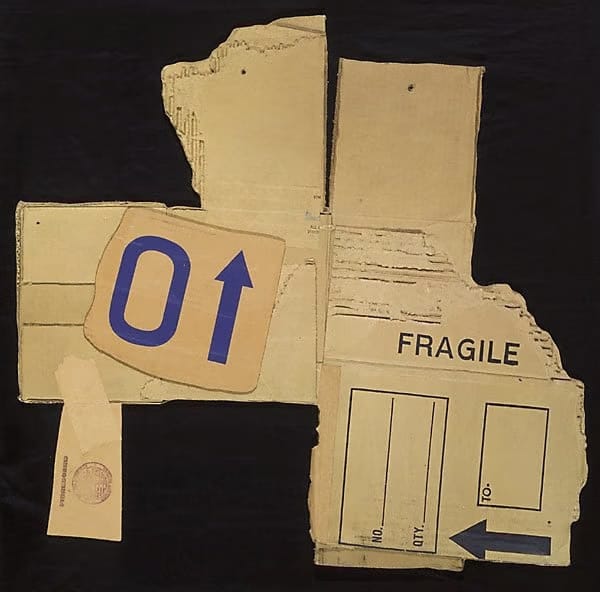
We hand over the flat-pack. Then wonder why no one sees the full box.
Story of You is a hybrid methodology at the intersection of communication, values coaching and self-expression with more than a touch of mindfulness. It’s informed by writing craft and memoir, just as it is by my many years working on business development and global communications.
congruence (n.) /ˈkɒŋ.ɡru.əns/
the quality of being similar to or in agreement with something.
from the Latin congruere — to come together, to agree, to meet.
My translation: when the inside and the outside are the same shape. When what you feel, who you are, and how you come across finally agree.
incongruence (n.) /ɪnˈkɒŋ.ɡru.əns/
formal: the state of not fitting well with something else. mathematics: when one shape does not have the same shape and size as another.
My translation: Two versions of you that are no longer the same shape. The pain of not being met as what you actually are. Or worse, a self that cannot meet itself.
(Definitions: Cambridge Dictionary)
I heard the term ’when your presentation falls flat‘ not long ago. And the word flat had me scratch my head, my hands have a way of telling me when I’m reaching deep, or when something doesn’t feel quite right.
Flat as opposed to what, I asked myself.
An image landed in my mind, one of a standard brown cardboard box, the kind you buy when you prepare to move house.
There is the flat-pack.
And there is the fully expressed 3D version.
The analogy unfolded from that simple word. Flat. It opened up a new way of showing who and what Story of You is for.
You see, there is a particular breed of us misfits who really have a pressing and essential need to share who we are, in as much fullness as possible.
I remember that in a session with my quantum therapist (and no, I can’t explain his job), he reflectively offered: “Ah, yes. He paused. Your soul wants to be known.”
I rolled my eyes at the camera (we were on WhatsApp video). I meant to argue with him but a tug inside of me had me swallow the words before they reached my lips. I paused. “Nah, just admit it. He’s right,” a voice inside of me pointed out, matter of fact.
This had me think about what this work is and who it’s for, what I call Story of You. Because, three years down the line, it’s clear that Story of You is not for everyone. After a little digging, here’s what I came to conclude.
The people drawn to this methodology share a drive that goes way beyond communication.
Story of You for people who care about expressing themselves authentically.
Or connecting with others from that authentic place.
But Anne, you may say, most people want that, don’t they?
(Imagine a buzzer sound) Wrong!
Without going quantum mystic on you, I've recently discovered that in certain academic circles, people refer to personal expression across a spectrum: on the one side, we have the Authentic Self and on the other, the Presented Self. The words do a good job here. We all have an authentic self, that experiences a multi-dimensional inner life, and when we are out in the world, we show a manipulated version of that self, the Presented Self.
We can all agree that we don’t say everything we think when in public. We learn the acceptable social codes, and when we don’t, life teaches us, an awkward and sometimes painful process. We are taught to show ourselves at specific angles, presenting the ‘right,’ most flattering or relevant version of ourselves depending on the environment.
But for most of us, we’re only showing a sliver of that multi-dimensional inner life.
Here’s how we could illustrate the gap between the authentic and the presented self.
In other words, if your inner life is like a grand multi-faceted and complex cardboard box, your presented self is often the flattened version of the box.
The way I see it, the Presented Self is part created by choice (aka under our control) and part automated (running our OS, think our operating system, made up of the beliefs that run our lives in the background).
The automated part was built from years of feedback, parental, societal, self-referential.
That new shape has us fit in with more ease. Right?
We've learned to flatten because people told us "that's the shape you should take" as a human in this society. So our presented self is the flattened cardboard. You know them, you've shopped for them before.
It’s a handy conversion of our full expression. Meanwhile, it’s unfortunately incongruent with the fuller expression of what the box is.
THE PAIN IN THE INCONGRUENCE
Now some of us don’t mind that we are not the same inside and out. From flat to unpacked or vice versa, they are content.
I’ve got a good friend who only presents a sliver of who they are in public. While they are, by all accounts, really bad at talking about themselves, they could not care less. The earth doesn’t stop turning when they fail at describing themselves, their work. Their recognition needs are being met in other ways. Plus they have a whole story about why that’s actually not a problem.
Some will feel discomfort, knowing that they are serving a lesser version of their full expression, but they’ll tell themselves: “I don’t think I need help. I can manage as it is.” The refusal of the call, in hero’s journey terms. They find solace in the discomfort. It’s what they know. Also, the pain isn’t acute enough.
Meanwhile others may bolt upright in the middle of the night, beads of sweat at their temples, the incongruence slipping into anxious thoughts disturbing their rest. They try to forget about it, but the more they ignore the issue, the more the authentic self feels ignored, the more the discomfort grows.
With their peace gone, their minds frantically look for a solution. This cannot do. This needs to get better.
This being the “flat-pack self-presentation”. The pain comes from not being received as they'd intended.
But of course, the realisation that comes next is this: if all we ever do is hand people a flat pack, we are putting the responsibility of the unpacking to those on the other side.
This moment, the intersection of that felt sense of ’things must change now’ and ‘oh I see the outline of the problem’ is generally when people get in touch with me. They groan in pain from the acute felt sense of the gap. Once they see the difference between flat-pack and 3D, they cannot unsee it.
What is happening inside is not ‘just’ about communicating ourselves clearly.
It’s about being able to paint an accurate picture so that others can see the unique, multi-dimensional life they hold. They feel an even greater, existential pain at showing the flattened version. They want to share their depth and complexity and uniqueness. They want to be known for who they are. And the flat-pack doesn't get them there.
With every occasion they miss, it’s like they forget the “full shape” of the box-essence. When they want to reconnect with it, they realise they‘ve lost their ability to deploy, open up the folds, and take the space that is theirs to take. They’ve been flat for so long. They tear at the construct, try to pry it open, blaming themselves for not being capable of bringing this 3D version of themselves into life.
My clients come to me because a voice inside of them says: ‘This has to unfold.’
Another way of saying it is: ‘I want to remember how to take that space. I want people to see me for who I am.’
The gap, or the pain, that was showing up as communication failure, the failure to be seen or understood by others. But the underlying need is what I call self-access.
It’s remembering.
It's getting clear about the flattened or forgotten parts of who we are and what we stand for.
It's finding (and naming) what gives us meaning.
So that we can show it to the world. Or at least to the people we care about.
The real juice of Story of You is actually not telling the story, it starts with that self-access, the ability to retrieve, and later unfold who we are.
I want to pause on that word for a moment: self-access. It might feel abstract at first, but read it again and you'll notice it holds an image inside it. Access is a door. A way in. More uncommon than self-understanding, self-access tells another story. Self-understanding is something we arrive at. Self-access is something we practise. A door we keep learning to open. Some days the door is heavier. Some days it swings.
Self-understanding is what you might arrive at after years of self-access. But access is what you can build, today, with practice. That's why I chose the word.
But self-access is not something we pursue for its own sake. Remember? The soul want to be known.
This work, especially when it's about being authentic, can only be revealed when experienced by another. How else do we know how we are received?
No one can fully appreciate their own beauty and strengths unless those things are mirrored back to them in the mind of another.’ - How to Know a Person: The Art of Seeing Others Deeply and Being Deeply Seen, David Brooks
The coaching relationship is the mirror that solo introspection cannot offer. But for self-access to happen, we need to feel safe enough in ourselves. The coach is responsible for creating what I call a safe container, to guide the clients to self-access, before they can become the mirror.
Whether in a dyad (the smallest possible group, one on one), or larger groups, the coach guides the client in that safe access, together they examine, explore, experiment.
The prefix is significant. Ex, meaning: out of. Or away from. We need to reach inward, learn to access the multi-dimensional shape of who we are.
In truth, we will never be able to translate the inner shape into the outer expression. That’s just not how a human spirit reveals itself. Just like some words are impossible to translate from one language into another, our authentic self will never be the presented self.
Instead, we have this other possibility, to use the pieces we have discovered within and create a new shape that honours the essence of that authentic inner self.
My work is akin to guiding people along a path, helping them get over the obstacles, so they can reach within and retrieve the pieces, and even guide them to put those together for outward expression. It’s a discovery process, and after discovery, it’s a creative endeavour. One in which we craft, or author, the new presented self.
If you hear someone say "I'm terrible at talking about myself," know that their problem isn't communication. It's almost always a problem of self-access. They've lost the door inward (many of us have) and without it, the words can't carry their shape.
The Story of You Workshop isn't a course on telling your story. It's a practice in accessing more of yourself. The story emerges from that.
The last live run in this current format is on Wednesday. Two days from now. After this, the methodology will evolve into something more structured, and I won't be running this same workshop again. If self-access is the door you've been looking for, that's where it's open.
Wednesday June 17th, 4:30 PM - 6:30 PM CEST
Details and registration here.
Any questions, drop me a line. Warmly, Anne