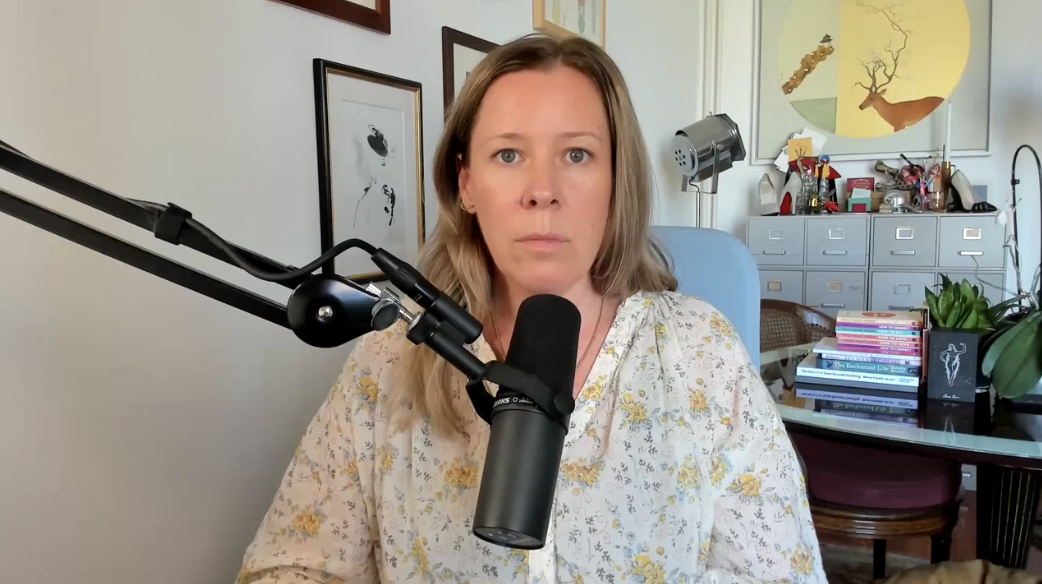
We have turned the search for work, or clients, or an audience, into a private performance of visibility.
Have you noticed how much everyone is producing right now?
Some friends of mine reflected this back to me over brunch back in the Spring. 'You do so much,' is what they said. In my head, it wasn't that much. But in terms of output, I can't deny that some weeks, being on a roll, I was putting posts up in such a way that they, my engaged audience, would see a lot.
The algorithms doing what they do, particularly on LinkedIn, will push the voice of people you engage with over and over again to the point that I dread opening the app on my iPad.
I know that invariably, I will see the same contacts, the same friend's work. The algorithm has a way of shoving things in our faces without us asking, or just as bad, removing things from view, making the time spent on their feed excruciatingly boring. Or enraging. Or both.
So… more posts. More content. More messages. More presence, whatever that means at this point. A machine-led system that decides who sees what, in ways that don't necessarily serve us. Or, let me correct, at least for me, no longer does. And underneath the algorithm, a light panic about invisibility is bubbling. Because the answer to not being seen, we're told, is to produce more.
Not to produce means not to be seen. Not to be seen leads to irrelevance.
If you seek to create connections online, this concerns you.
I want to name something about the current moment, because I think it explains a feeling you may have without the words for it yet.
Communication used to be a relationship. It has been turned into production.
Here is the difference.
When communication is a relationship, the question you ask before you write is: what wants to be said? Who am I speaking to? What do they need to hear (about me, about this)?
When communication is production, the question becomes: what will get seen? How many likes am I going to get? How is this going to go viral?
We are no longer asking the first questions.
The attention economy has taught us to confuse output with impact, and AI only accelerates the confusion. If the point of communication is simply to feed the machines (and enrich the billionaires), we have already lost the human thread.
Nowhere is this clearer than in the search for work right now. I say this not because I’m looking for work, but because I’m concerned about the future of work. I always have been. This has been a pillar of this newsletter right from the beginning because I care about what we express through what we do in life.
Also, as an avid reader, the slew of articles I’ve pored over in the last six months alone depict a dire situation.
You send out the CV, the pitch, the carefully crafted post, and what comes back is silence, or an automated rejection, when you are lucky.
And the advice that follows? Produce more. Be sharper. Stand out. Optimise your voice for the algorithm.
We have turned the search for work, or clients, or an audience, into a private performance of visibility. The burden of being seen has been pushed entirely onto you, while the system itself becomes more silent, more opaque, more automated. We are effectively at the service of the machines. Already.
That is not communication. That is akin to shouting into a void that has been designed to say nothing back. The image that comes to my mind is Munch's The Scream: the same distorted face, but held up to a phone. Screaming into the darkness of the screen. Reaching no one.
LinkedIn jumps to mind as the current wasteland where good, quality posts go to die, just as the platform turns to influencers, a move that would have been unimaginable (at least to me) a couple of years ago. (If they're getting one thing right, it's the recognition that voice matters. Even the machine is tired of platitudes.)
And here is what gets lost.
Writing and self-expression were never merely tools for visibility.
Done with feeling, they help us think, remember, and find meaning. As I’ve written before, stories are how we learn how to navigate life. That's how we help each other through the good and the bad and the murky.
Done at surface level, this becomes performative output: we give our time, our energy, to platforms that concentrate our attention and capitalise it (a framing I owe to Josh Citarella), while it does very little for the person writing, and even less for the person stuck behind their screen, eyes glazed over, scrolling past.
Because here is the truth about what we are actually after.
I often say this: What we always want is not to become a good communicator, but what's on the other side of good communication.
And what's on the other side is never the metric. We don't 'just' want a large following on LinkedIn. Or wherever. We want people who care. People who'll repost, comment, come back, promote us to their friends. We want people who get us.
Empty followers mean nothing.
I saw a post recently (the kind you have seen a hundred times) that did everything right. Names were tagged in a display of public gratitude after an event. The likes arrived. And comments. And yet there was no voice in it anywhere. No opinion. Nothing of what the writer saw, learned, or wondered, nothing another person could navigate by. The post worked as social currency. It did not work as thought. The feedback was positive. It was not meaningful. Those are not the same thing, and we have stopped noticing the difference.
I get it, the pressure. The need to work against that risk of not being seen as engaging enough.
So before your next post, your next pitch, your next carefully worded anything, one question is worth sitting with:
Does this deepen human contact, or does it only help me survive the algorithm?
I’ll make sure to keep asking myself that same question., because at the end of the day, we are in this together.
Thanks as always for reading me, I never take your time (or attention) for granted. Until next time, be well.
Anne
DIVE DEEPER
The New York Times covered LinkedIn’s recent influencer developments in this aptly titled: Is LinkedIn Entering Its Post-Cringe Era?
For weeks I’ve been reading about recruitment troubles for young graduates or just younger generations. I’d been wondering when the forty-plus would start to talk about the ghosting and the hardships of finding work in the AI-HR era. This week’s explosive story comes from Stacey Duguid, a woman I once knew (and had a disagreement with, like 15 years ago, over a pair of shoes of all things) who hails from the same industry as me. Fashion. The picture is bleak. You can read her story on the Times website, or watch ABC News covering the story for free here.
The Mettā View
Join my newsletter, the Mettā View, about story, practice, and the work of becoming the brightest version of yourself.