We will never know another person fully. But perhaps we can feel for who they are.
"If I want to see you, I want to see, at least a little bit, how you see the world. I want to see how you construct your reality, how you make meaning. I want to step, at least a bit, out of my point of view and into your point of view."
— David Brooks, How to Know a Person: The Art of Seeing Others Deeply and Being Deeply Seen
No one can see a whole tree. Not at a single glance. Not even a bonsai tree.
You could stand above one, and stare at its delicate canopy, yet only part of the trunk will be visible. Despite it being miniature and you towering over it, you’d be missing the roots, the underbelly. You’d think: ‘I got a pretty good view’, yet you’d never capture it whole.
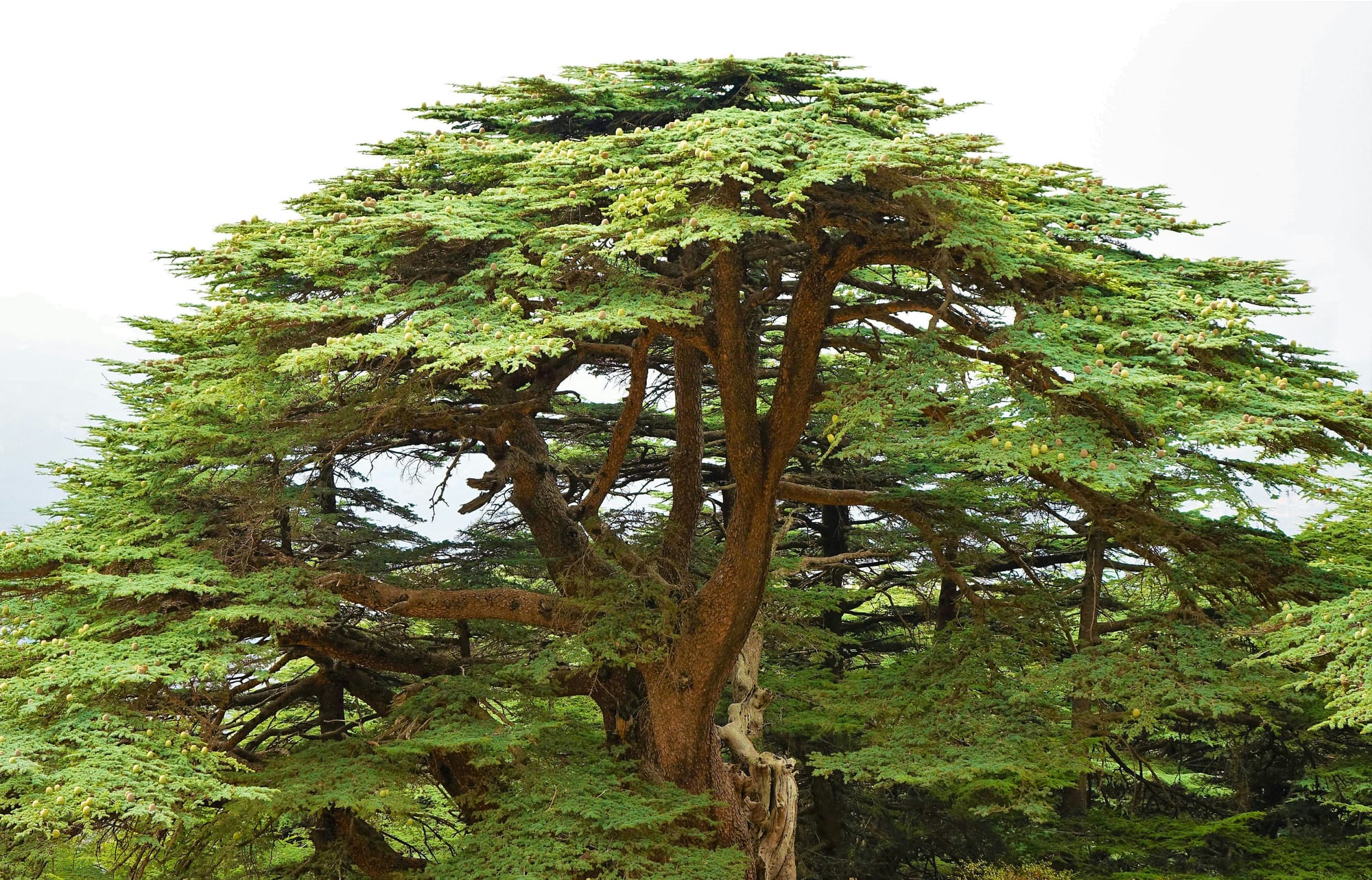
My favorite tree (yes, I have one) is a monumental cedar of Lebanon in the nearby Parc Beaulieu. It was gifted to the then landowner in 1765. Imagine that.
When I visit it, I let myself lean against its rough and scaly trunk (I ask permission first) and often tilt my head up to look through its branches. From that vantage point, one could think it reaches the sky. From my point of view, it absolutely does.
We can never see a whole tree but no one ever stops to think about it.
The fact is: our vision is determined by our position, our physiology, from our height to our eyesight and even, to the quality of our attention. Our outer vision is limited. I find this to be a very egalitarian constraint. Everyone’s vision is different and equally somewhat limited.
Just as you never stop to think ‘I can’t ever see the whole of a tree’ you probably never reflect on how you can never see (or understand) the whole of another human being.
Yet it’s true.
From your inner (and outer) vantage point, your understanding of another is limited. No one will ever know another being fully.
But there’s something else we can aim for, if not full vision, if not full understanding.
We will never know, but we can feel for who someone is.
…
Now let’s turn this around.
Everyone who meets you, reads you, listens to you, they are standing somewhere too. They catch one side of you, from wherever they happen to be planted. Their opinion, understanding, forms through their condition and unique perspective. They may think they see a lot, or only a little. What they see and understand may be only a sliver.
You are a tree. What kind of tree you are, I don’t know.
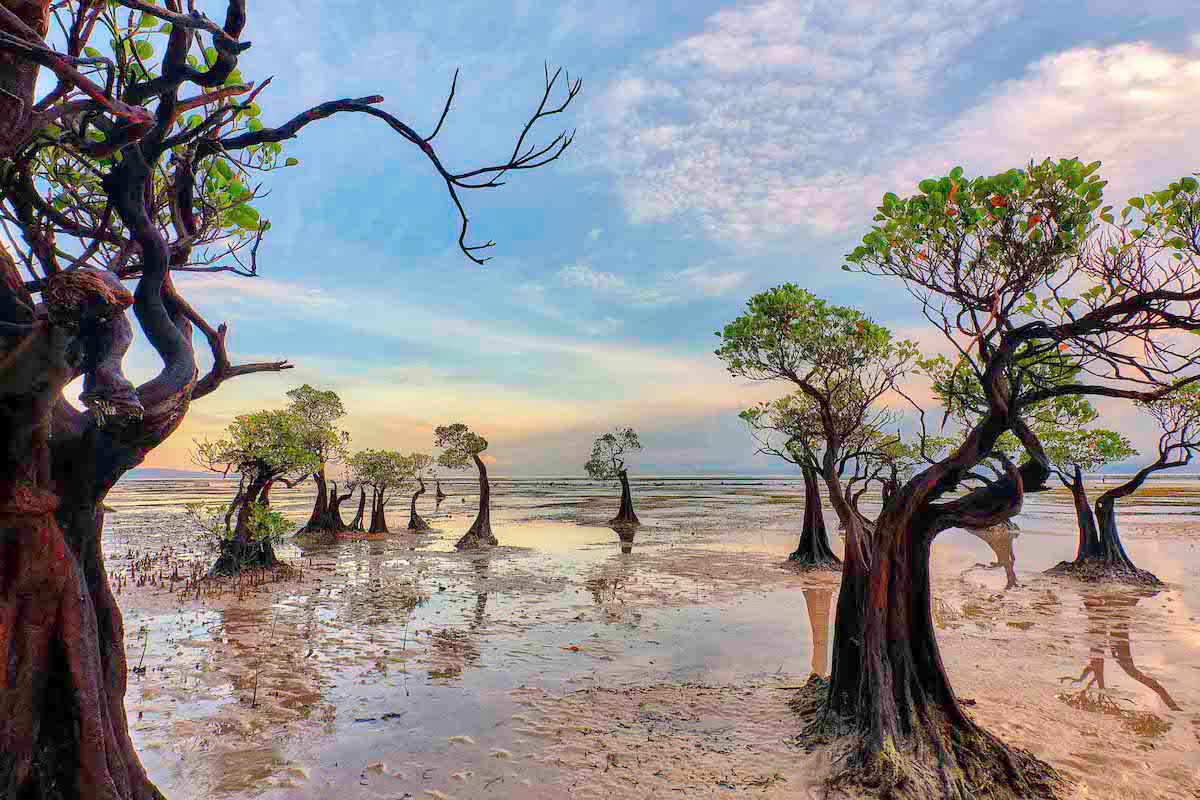
I like to think I’m a mangrove (I know, I’m Swiss, it’s metaphorical work).
You are a tree and none will ever see you fully. Know you fully. But you can learn to make us feel for who you are.
When you write, when you speak, bring us close to have us better understand what you’re made of.
Tell me what the tree feels like. Describe the texture of the leaves, the pliability of the outer branches. The thick and rough external bark of the lower trunk and the way that your roots meander deep into the soil.
You are the tree. Make us feel what you are made of.
Maybe you don’t see yourself as the tree.
Maybe at this stage, you are the seed.
What’s in a seed? I don’t know.
At the seed level, you may think there is less to show. And yet. Tell us about the ground that holds you, the shell that protects you, the life moving inside and the promise contained within you. Hidden underground though you are, have us discover the tree shape you are curled into. You are already whole. Just small. And in the dark.
And reminder: the seed came from somewhere, it also has a story to tell.
You are the seed. You are the tree contained within the seed. Make us feel what you are made of.
PS — And if you’re less metaphorically minded, but perhaps you once asked yourself why you don’t feel rooted, why you don’t feel so attached to the place you come from: some seeds are simply made to travel. Mangrove seeds can float for hundreds of miles at sea, sometimes for over a year, before they find the ground that’s right for them. Sometimes a seed needs to go far to find the right ground. I wrote about this (and about my own late rooting) in this personal essay → Root to Rise.